Introduction
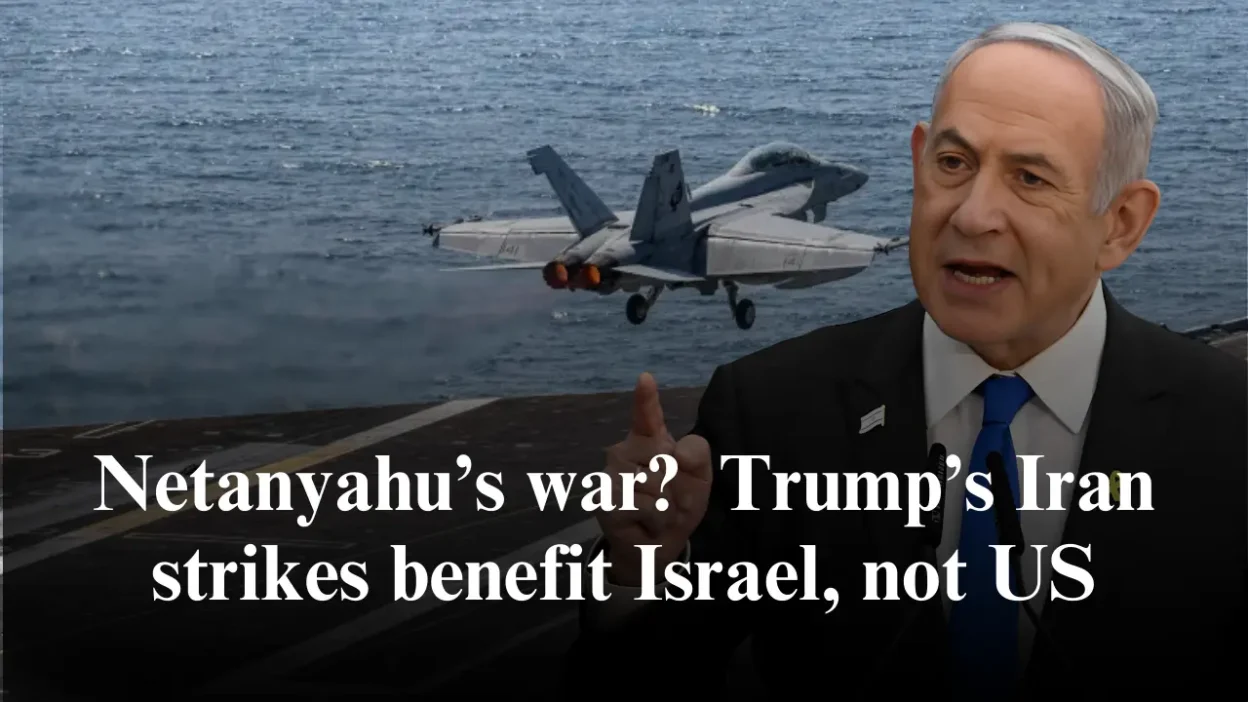
The recent escalation of US military action against Iran has raised eyebrows internationally, with experts questioning the real beneficiaries of the strikes. Analysts argue that the operation, while framed as protecting American interests, primarily serves Israel’s strategic agenda. This development highlights the complex intersection of US foreign policy, Middle Eastern geopolitics, and domestic public opinion.
In this article, we explore the background of the strikes, expert analyses, and the broader implications for the US, Iran, and Israel.
Background: Trump’s Shift on Middle East Policy
When Donald Trump returned to office, he initially criticized regime-change interventions in the Middle East, emphasizing diplomacy over military action. During a 2025 visit to the region, he declared a shift away from nation-building and warned against unnecessary interventions.
Yet, less than a year later, Trump authorized a full-scale assault on Iran, citing the goal of promoting “freedom” while adopting rhetoric previously used by interventionist neoconservatives.
This move appears contradictory to Trump’s stated foreign policy priorities, prompting analysts to question the underlying motives.
Expert Analysis: Who Benefits?
Multiple Middle East analysts, including Negar Mortazavi from the Center for International Policy, assert that the strikes benefit Israeli interests more than American objectives:
- Israel, led by Prime Minister Benjamin Netanyahu, has long lobbied for US action against Iran.
- The strikes align with Netanyahu’s decades-long warnings about Iran’s nuclear and missile programs.
- Critics argue the action undermines diplomatic efforts and bypasses the US public’s opposition to war.
Mortazavi stated: “This is another Israeli war that the US is launching. Israel has pushed the US to attack Iran for two decades, and they finally got it.”
The Threat Debate: Iran’s Capabilities
Netanyahu and Trump have publicly claimed that Iran poses a direct threat to the US and its allies:
- Israel emphasizes Iran’s nuclear program and missile capabilities.
- Trump has repeated warnings about ballistic missiles reaching American soil.
- Tehran denies seeking nuclear weapons and insists its missile programs are defensive.
Independent assessments suggest that while Iran can project regional power, the country does not currently pose an imminent threat to the US mainland.
Public Opinion and Congressional Concerns
The American public remains largely skeptical of military escalation:
- Recent surveys indicate only 21% of Americans support war with Iran.
- Critics argue that Trump’s actions ignore the electorate’s clear preference for diplomacy and non-intervention.
- Congresswoman Rashida Tlaib called out the administration for advancing conflicts benefiting foreign agendas rather than US national security.
This disconnect between policy and public opinion raises questions about accountability and strategic rationale.
Diplomatic Efforts Undermined
Before the strikes, US and Iranian negotiators were engaged in constructive talks, mediated by Oman. Experts say the timing of the attacks undermined these diplomatic efforts:
- The June 2025 strikes by Israel coincided with US-Iran negotiations.
- Analysts suggest Netanyahu’s strategy seeks to prevent a diplomatic resolution, ensuring military conflict over negotiation.
- Jamal Abdi of the National Iranian American Council highlighted that Trump’s embrace of regime-change rhetoric further aligns with Israeli interests, not American ones.
Regional Implications
The escalation has serious consequences for Middle East stability:
- Iran retaliated by firing missiles at US bases across the region, intensifying tensions.
- US forces face potential casualties in ongoing conflicts.
- The risk of broader regional destabilization increases, impacting trade, energy markets, and geopolitical alliances.
The intervention also highlights how US foreign policy can be influenced by allied nations’ strategic agendas, sometimes at the expense of American interests.
Conclusion
Trump’s military strikes on Iran exemplify the complex interplay between US foreign policy, Israeli strategic goals, and public opinion. Analysts argue that these actions primarily serve Israel, undermining diplomacy and contradicting both Trump’s stated objectives and American public preferences.
As tensions persist, understanding the motivations and consequences of these strikes is crucial for citizens, policymakers, and global observers. Maintaining focus on diplomatic solutions while critically evaluating strategic alliances remains essential to preventing unnecessary conflict.
Stay informed on Middle East developments: The US-Iran-Israel dynamics will shape regional and global security in 2026 and beyond.