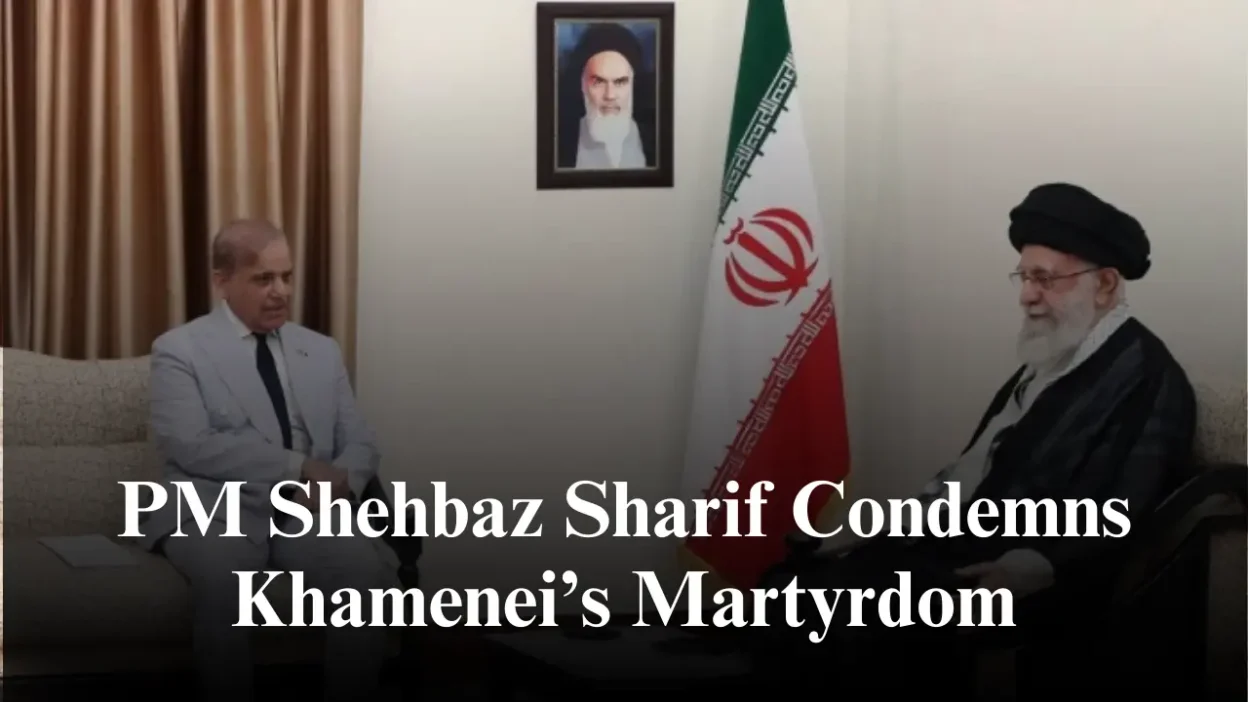
In a strong diplomatic statement, Prime Minister Shehbaz Sharif condemned the killing of Iran’s Supreme Leader Ayatollah Ali Khamenei in the recent joint strikes by the United States and Israel, describing the act as a “violation of the norms of international law.” The strikes, which began on February 28, 2026, have escalated regional tensions and triggered widespread international concern.
Pakistan’s premier emphasized that heads of state or government should not be targeted, reflecting Pakistan’s stance on sovereignty and international conventions. This article explores PM Shehbaz’s reaction, Pakistan’s diplomatic position, and the broader implications for Middle East stability.
PM Shehbaz Sharif’s Statement
On March 1, 2026, PM Shehbaz addressed the incident via his official X (formerly Twitter) account, stating:
- It is an age-old convention that heads of state should not be targeted in military operations.
- Pakistan extends heartfelt condolences to the Iranian government and people over Khamenei’s martyrdom.
- The nation prays for strength and patience for Iranians during this “irreparable loss.”
“The Government and the people of Pakistan join the people of Iran in their hour of grief and sorrow and extend the most sincere condolences on the martyrdom of His Eminence Ayatollah Seyyed Ali Khamenei,” PM Shehbaz tweeted.
Regional and Diplomatic Implications
Khamenei’s death, confirmed by Iranian authorities, has major regional consequences:
- Heightened Tensions: The strikes mark a significant escalation in the Israel-Iran conflict, increasing the risk of retaliatory attacks across the Middle East.
- International Law Concerns: Targeting a sitting head of state is widely viewed as a violation of established international conventions, potentially setting a dangerous precedent.
- Pakistan’s Role: By publicly condemning the attacks, Pakistan signals its commitment to diplomatic norms, neutrality, and support for peaceful resolutions in the region.
PM Shehbaz’s remarks also reflect Pakistan’s historical ties with Iran and the emphasis on maintaining stability in the Gulf and Middle East.
Public Reaction and National Support
PM Shehbaz’s condemnation has been widely supported in Pakistan, with officials emphasizing:
- Solidarity with Iran’s government and people.
- A call for restraint and adherence to international law.
- Urgency for United Nations intervention to prevent further escalation.
This response underscores Pakistan’s focus on peaceful diplomacy and regional stability, while addressing domestic concerns about the broader impact of the conflict on security and trade.
Broader Context: US-Israel Strikes on Iran
The strikes, coordinated between the United States and Israel, targeted multiple military and strategic sites in Iran. While intended to neutralize perceived threats, the operation resulted in:
- Civilian casualties, including attacks on schools and residential areas.
- Regional alarm, prompting calls for de-escalation from China, the UN, and neighboring countries.
- Intensified Israel-Iran hostilities, raising the potential for a prolonged conflict in the Middle East.
Pakistan’s condemnation aligns with international calls for restraint, negotiation, and respect for sovereignty, reinforcing the country’s diplomatic positioning amid complex geopolitical dynamics.
Conclusion
Prime Minister Shehbaz Sharif’s condemnation of Ayatollah Ali Khamenei’s martyrdom highlights Pakistan’s commitment to international law, regional stability, and diplomatic norms. By denouncing the US-Israel strikes as unlawful, offering condolences to Iran, and urging restraint, Pakistan positions itself as a mediator and advocate for peaceful solutions.
As the Middle East faces heightened tensions, Pakistan’s stance underscores the importance of sovereignty, law, and diplomacy in preventing further escalation and maintaining regional security.
Stay updated: Understanding Pakistan’s diplomatic position helps contextualize broader Middle East dynamics amid ongoing conflict.