Introduction: The Architect of Modern Iran’s Resistance Identity
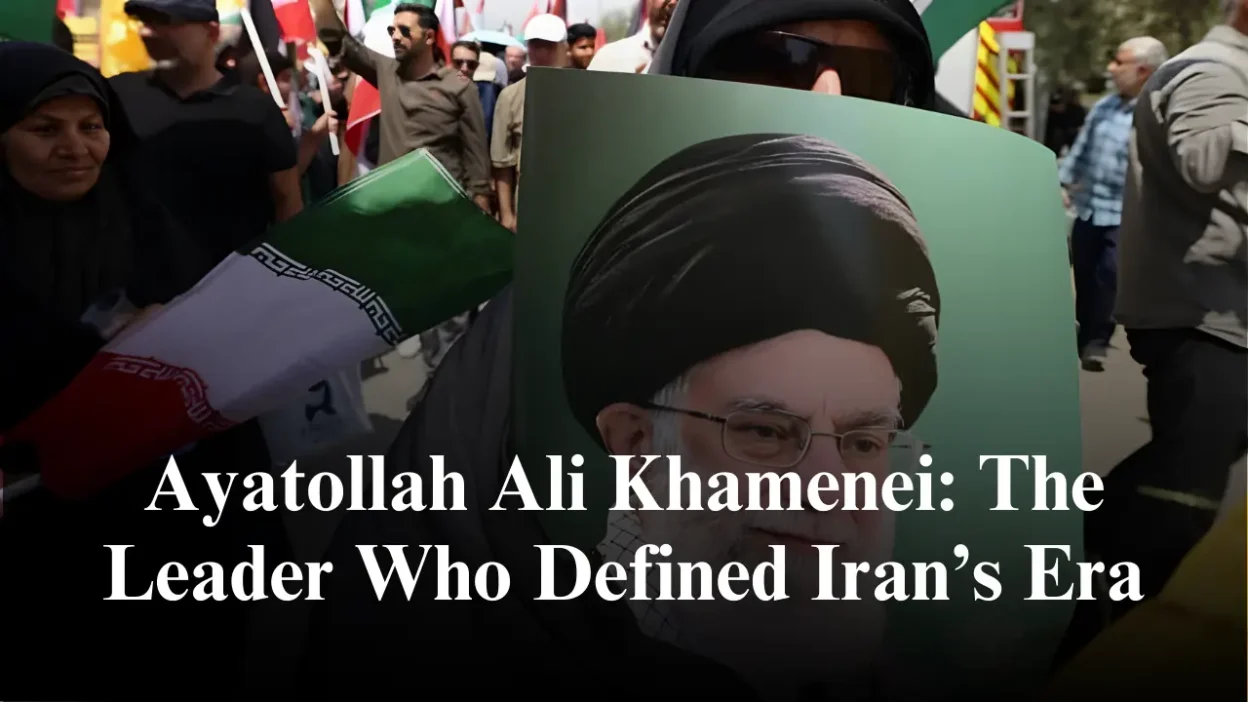
Ayatollah Ali Khamenei was not just a political figure — he was the embodiment of Iran’s modern defiance against Western influence. From rising through the ranks of the Islamic Revolution to leading the country for nearly four decades, Khamenei’s rule steered Iran through wars, sanctions, proxy battles, and intense internal dissent. His death in early 2026 marks the end of one of the most consequential chapters in Middle Eastern history.
In this deep-dive profile, we explore who Khamenei was, how he shaped Iran’s political and security apparatus, and why his legacy remains deeply contested — both inside Iran and on the global stage.
Early Life: From Theology to Revolutionary Activism
Born in 1939 in the holy city of Mashhad, Khamenei grew up in a religious household that emphasized scholarship and Islamic teachings — a foundation that would later influence his leadership style. His education initially focused on religious studies in Mashhad and later in the major Shia seminaries of Najaf and Qom.
During the 1960s and 1970s, as Iran’s monarchy under the Shah faced growing opposition, Khamenei became deeply involved in revolutionary activism. He was repeatedly arrested by the Shah’s secret police (SAVAK) for his role in anti-monarchy protests. These early struggles against authoritarian rule forged his lifelong distrust of external powers — especially the United States and Western influence in Iran.
Rise to Power: From President to Supreme Leader
After the 1979 Islamic Revolution, Iran transformed from a monarchy into a revolutionary theocracy. Khamenei quickly emerged as a prominent political figure, serving as Iran’s president from 1981 to 1989 — years dominated by the brutal eight-year war with Iraq. His tenure during the conflict deepened his belief that Iran must always be prepared for external aggression.
When Ayatollah Ruhollah Khomeini — the founder of the Islamic Republic — died in 1989, the parliament and clerical council selected Khamenei as the new Supreme Leader, despite him not holding the highest clerical rank at the time. In doing so, they had to amend constitutional requirements. This decision catapulted Khamenei into the most powerful position in Iran’s political system.
Defining Leadership: Ideology of Resistance and National Security
From the beginning, Khamenei’s worldview centered on the idea that Iran was constantly under threat — not just militarily, but culturally and politically. He saw Iran as needing perpetual readiness against both internal unrest and foreign intervention.
This “siege mentality” became a hallmark of his leadership:
- Strengthening security forces: Khamenei expanded the Islamic Revolutionary Guard Corps (IRGC) from a revolutionary militia into a powerful military and economic institution integral to Iran’s defence and political structure.
- Defense-oriented foreign policy: His strategy leaned heavily toward deterrence — with Iran backing allied groups across the Middle East in Lebanon, Iraq, Yemen, and Palestine through what became known as the “axis of resistance.”
- Skepticism of Western engagement: While pragmatic at times (such as allowing nuclear deal negotiations in the mid-2010s), Khamenei remained deeply suspicious of Western intentions. This shaped Iran’s repeated cycles of negotiation and renewed tension, especially with the United States.
Military and Strategic Influence: The IRGC and Regional Power
Under Khamenei’s leadership, the IRGC rose to unprecedented prominence — evolving into a central arm of Iran’s political and economic life. Not just a military force, it became embedded in industry, intelligence, and governance.
The IRGC’s Quds Force — responsible for external operations — extended Iran’s influence by supporting armed groups and allied regimes across the Middle East. This network helped Tehran exert leverage far beyond its borders while also escalating tensions with rival powers.
This approach often brought Iran into direct confrontation with rival interests, particularly Israel and the United States, and played a role in multiple conflicts. The strategy was designed to deter external aggression while projecting Iranian strength to regional actors.
Internal Challenges: Protests and Public Discontent
Despite his tight grip on power, Khamenei’s rule was not free from internal turbulence. Over the years, Iran witnessed repeated waves of popular unrest — most notably:
- The 2009 Green Movement, sparked by disputed elections.
- The 2022 nationwide protests, triggered by the death of Mahsa Amini in morality police custody.
- Widespread demonstrations over economic hardship and political stagnation.
Critics argued that Khamenei’s focus on defence and external resistance came at the expense of economic reform and political freedom — alienating segments of the population, especially younger Iranians seeking change.
Diplomacy and Nuclear Policy
One of the most consequential periods of his leadership came with the 2015 Joint Comprehensive Plan of Action (JCPOA), commonly known as the Iran nuclear deal. While formally negotiated by Rouhani’s government, Khamenei’s approval was crucial. The deal aimed at limiting Iran’s nuclear program in exchange for sanctions relief — demonstrating a rare moment of compromise.
However, when the United States withdrew from the agreement in 2018 under President Trump, Khamenei returned to a more confrontational stance. Tehran resumed higher levels of uranium enrichment, exacerbating tensions and leaving the region in prolonged uncertainty.
Legacy and Death: A Defiant Leader’s End
In February 2026, Ayatollah Ali Khamenei was reported killed in a joint U.S.–Israeli airstrike on Iran, a dramatic and historic development that shook regional geopolitics. Iranian state media confirmed his death, along with the deaths of close family members at his compound.
His death ended a nearly four-decade rule that fundamentally shaped Iran’s political culture, military posture, and foreign policy. Opinions on his legacy remain sharply divided:
- Supporters view him as a defender of Iranian independence and resistance to Western domination.
- Critics condemn his authoritarianism, suppression of dissent, and rigid response to internal demands for reform.
Conclusion: A Leader of Constant Defiance and Complex Legacy
Ayatollah Ali Khamenei’s life and leadership defined an era — one marked by military resilience, ideological defiance, and deep geopolitical tensions. From revolutionary activist to supreme leader, he steered Iran through some of its most challenging moments, embracing resistance as both doctrine and strategy.
Whether seen as a protector of national sovereignty or a barrier to reform, his impact on Iran and the wider Middle East will be studied for generations. With his passing, Iran enters a new chapter full of uncertainty — but the legacy of defiance he championed will continue to influence its political and strategic direction for years to come.